Alpha Discovery · Swing Template
#14 How to Build a Short-Swing Template With Breakout Radar
04/10/2026 · 7 min read
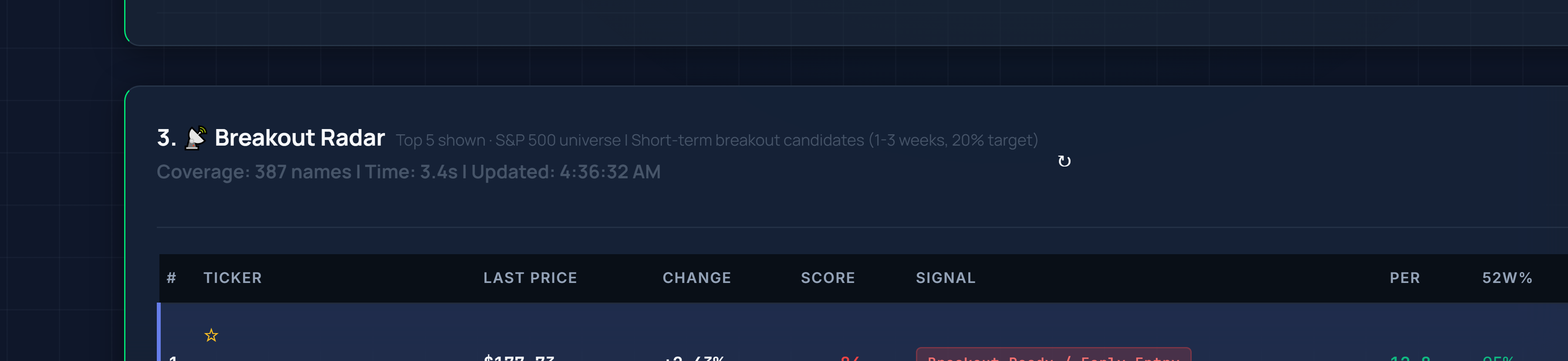
Live capture: Breakout Radar setups for short-swing planning.
📍 Home › ANALYSIS_1 › Breakout Radar
0) Where to Find This Widget
From the 12-tile dashboard, open ANALYSIS_1. Use Breakout Radar and Top 5 Breakout Picks on that page for setup quality and shortlists.
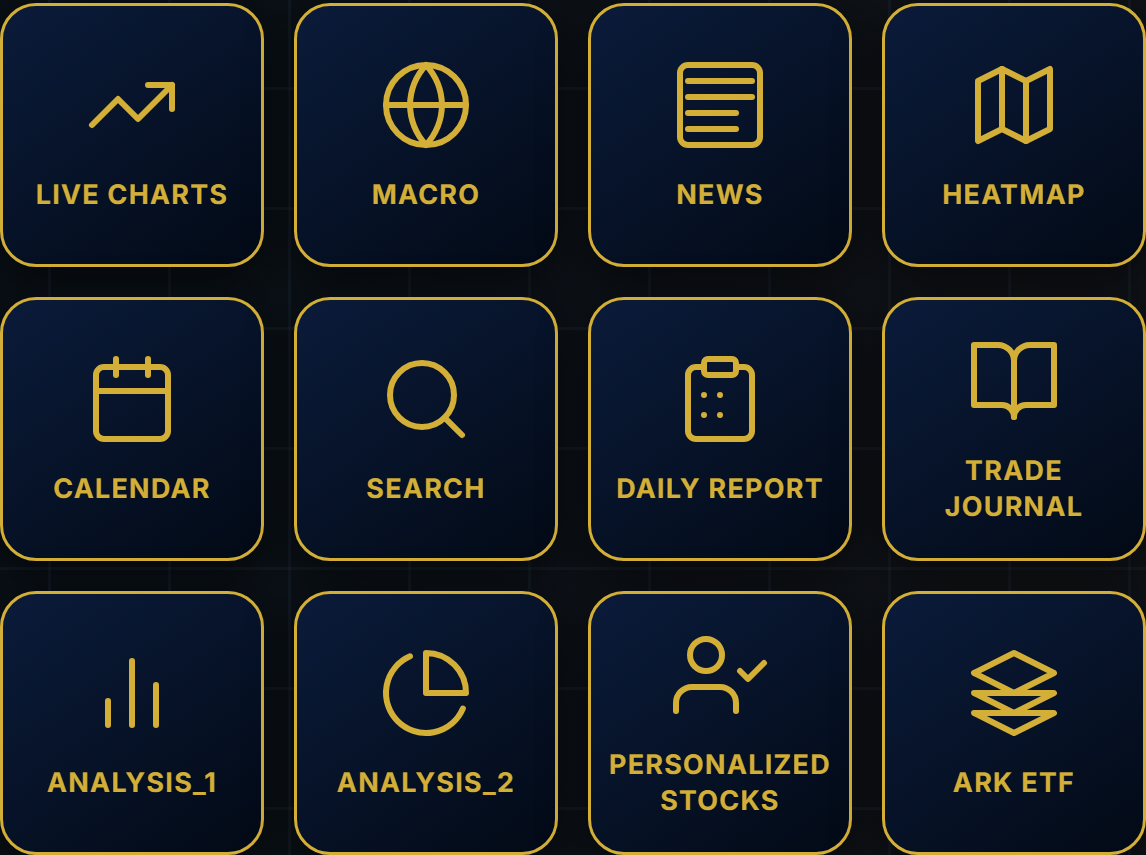
Live capture of Dashboard in Inveflo.
1) TL;DR
A short-swing template gives structure to fast breakout trades. It matters because most losses come from undefined invalidation and random exits. Use this template when Breakout Radar quality is at least medium.
Key Takeaways
- SwingEntryScore ≥ 78 is a hard gate: The 4-factor formula (45% SignalQuality + 25% Volume Confirmation + 15% Regime Support + 15% Catalyst Persistence) creates a single, objective entry rule. Scores below 78 mean wait. This prevents low-quality entries that drain capital and emotion.
- Two-tranche entry reduces whipsaw: First tranche (60%) on setup confirmation, second (40%) only if score remains ≥ 75. This method turns a binary yes/no decision into a graduated approach. You scale into winners and minimize loss on fakes.
- Setup invalidation is your stop location: Stop is the tighter of (a) setup invalidation (price level where structure breaks), or (b) -2.5% from entry. Never move your stop wider after placing it. Wider stops don't reduce pain; they just increase losses. Accept the invalidation and move to the next setup.
- Score deterioration before follow-through = exit signal: If score drops below 70 within 5-10 minutes of entry (before reaching first target), reduce 50% immediately. This is your early-warning system. Score drops often precede reversals, so trading through them costs real money.
2) Hook (Pain-Driven)
Many swing traders find good names but still lose due to poor execution rules. A valid setup without a template still becomes discretionary noise.
3) Problem
Without standardized entry, stop, and exit logic, breakout trades become inconsistent and hard to review.
4) Solution (Widget Introduction)
Use Breakout Radar for setup quality and Top 5 Breakout Picks for shortlist construction, then apply one execution template per trade.
5) Logic Breakdown (Formula + Thresholds)
- Entry allowed: SwingEntryScore ≥ 78
- Initial stop: below setup invalidation or -2.5% (whichever is tighter)
- Partial take-profit: +5% to +8% depending on regime strength
6) Practical Use (IF X → THEN Y)
- If score ≥ 78 and volume confirms, then enter in 2 tranches.
- If score slips below 70 before follow-through, then reduce exposure.
- If price reaches first target with stable score, then trail the remainder.
Should I buy now? Buy only template-qualified setups. Is this signal strong? Strong means score + volume + regime alignment. What should I do next? Apply tranche entry and predefined exits.
7) Common Mistakes
- Taking full size at first trigger
- Moving stop wider after invalidation
- Taking profit too early without score deterioration
This is not a standalone buy signal and requires strict risk management.
Frequently Asked Questions
What are the minimum quality requirements to enter a short-swing trade?
SwingEntryScore ≥ 78 (covers 45% SignalQuality + 25% Volume Confirmation + 15% Regime Support + 15% Catalyst Persistence). Additionally, volume must confirm within the first 5-15 minutes of the setup, and Composite Market Score must be ≥ 50. Without this 3-factor confirmation, the trade fails the template and should be passed.
How much of my position should I buy at the initial entry signal?
Enter in 2 tranches if SwingEntryScore ≥ 78: (1) First tranche = 60% of target position at setup invalidation confirmation; (2) Second tranche = 40% only if volume sustains and score remains ≥ 75. This two-tranche approach reduces whipsaw risk and lets you scale into a winner instead of gambling on the initial trigger.
When should I exit if the score drops below 70 before I reach my first target?
Immediately reduce exposure by 50%. A score drop before follow-through (within first 10 minutes) signals loss of setup integrity and often precedes a reversal. Do not hold hoping for a reversal; accept the loss and wait for the next template-qualified setup. Score deterioration is your early warning system.
What is the difference between 'setup invalidation' and my stop-loss?
Setup invalidation = the price level where the technical structure breaks (e.g., closes below entry candle low or prior support). Your stop-loss is the tighter of: (1) setup invalidation, or (2) -2.5% from entry. The tighter stop enforces discipline and prevents revenge trading. Never move your stop wider after invalidation occurs.
Related Blog Posts
- #4 Breakout Radar Signal Quality — Understand the signal quality scoring before building your short-swing entry template.
- #3 How to Narrow Deep Dive Results into Buy Candidates in 5 Steps — Use the five-step filtering workflow to select Breakout Radar candidates before applying this template.
- #17 Catalyst Surge Analysis: How to Score Catalyst Events — Combine this short-swing template with catalyst timing for higher-probability swing trades.
CTA: Open Scanner and Find Opportunities
CTA: Open Scanner and Find Opportunities
Scan the full S&P 500, compare quality and signal scores, and build your watch list before market open.